


Contract top-tier freelancers with confidence
Successfully navigating misclassification regulations requires the right tools and knowledge. Malt combines a state-of-the-art platform with hands-on support to help you confidently collaborate with freelancers.
Freelancer compliance: a complex challenge




Malt is your compliance partner every step of the way

We partnered with legal experts to develop a unique risk assessment tool that reviews each freelancer collaboration. This ensures you can structure projects confidently.

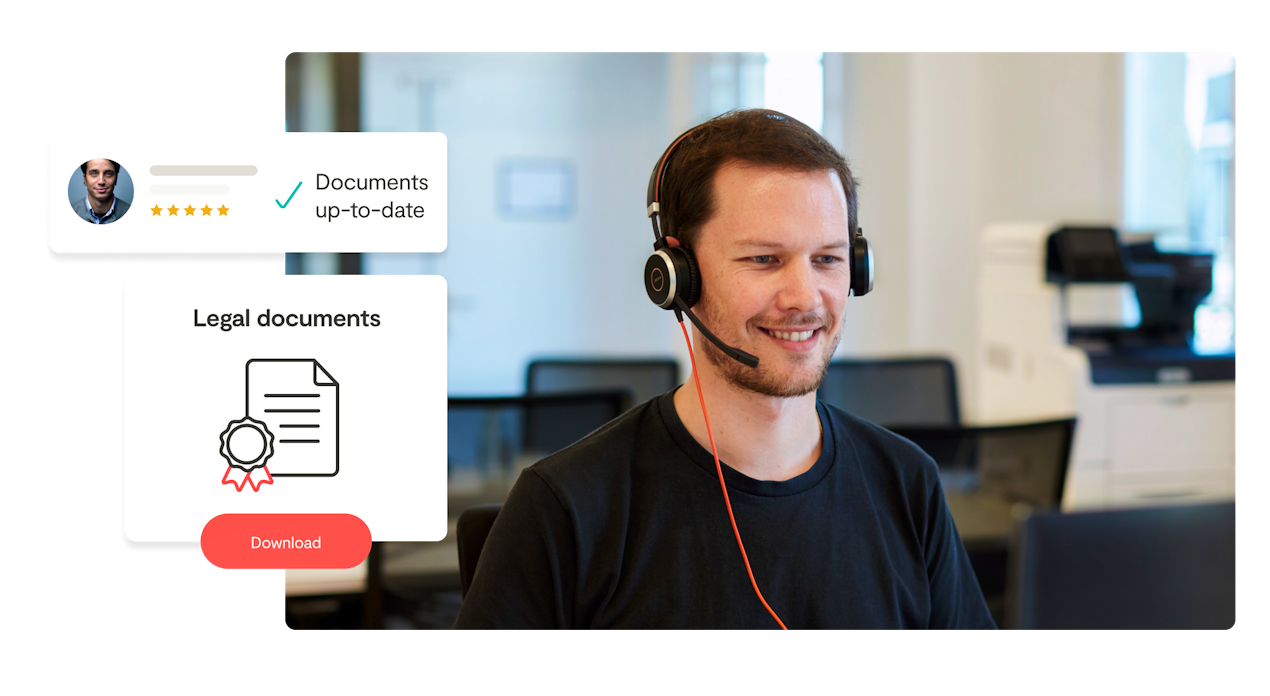
We ensure every project uses standardized contract templates that meet the legal requirements of genuine freelance work, and are reviewed and approved by your Legal team. Our legal experts are available to answer all your questions around Malt’s model and collaborate with you to set up a compliant legal framework.

Manage the contracts, quotes and invoices for all your freelance projects on one easy to use platform. Task-based and time-based quotes ensure engagements are framed with a defined scope and have clear deliverables.

Every freelancer goes through a rigorous verification process. We check their business registration, tax information, and verify they operate as self-employed entrepreneurs

Protect your business from worker misclassification with our compliance monitoring features that give a 360° view of your freelancer's status, documents, and other vital information. With our robust reporting dashboards you get detailed visibility on your entire freelance workforce
100,000 companies stay compliant with Malt




FAQ

Misclassification is a term referring to any instance where a worker is incorrectly categorised as an independent contractor instead of an employee. Misclassifying freelancers can result in fines, back taxes, and reputational damage. With the right guidance it can be avoided. Read more >>
Both freelancers and companies are responsible for reducing misclassification. Freelancers are responsible for registering their businesses in accordance with local laws.
On the other hand, companies are responsible for ensuring that their engagement with freelancers complies with local labour and tax laws, including correctly classifying workers. Read more >>
As a part of our thorough checking process, Malt reviews freelancers’ identity and paperwork to ensure they’re compliant with workforce classification and payment regulations.
For freelancers on Malt: we ask for a legal form, company name and address, registration number, and a VAT number (if applicable). Since our payment partners conduct KYC and KYB verifications for freelancers, they may ask them for documents like proof of identity, proof of company registration, and articles of association. In addition, we also verify complementary documents per local regulations (e.g., the attestation de vigilance in France).
For clients using Malt: we ask for the company name, registration number, VAT number, a legal headquarter address and billing information. Read more >>
- Freelancer autonomy: Freelancers should not be integrated into company structures (e.g., no employee benefits or hierarchical management).
- Distinguishing from CDI (permanent employment contracts) contracts: Freelancer engagements must clearly distinguish themselves from CDI contracts. To avoid any confusion and ensure freelancers are correctly classified, the working relationship should clearly define their independent status by minimising features typical of employment, such as no direct supervision and company benefits, while emphasising the freelancer's autonomy and control over their work.
- Social security contributions: Contractors manage their own contributions, based on earnings, and are responsible for staying compliant with French tax authorities.
- Cross-border rules: If hiring freelancers from other EU countries, it’s important to understand both French regulations and the freelancer’s home country laws. Read more >>